

SolectaINSIGHTS: Data-Driven Membrane Decisions
You can’t see the protein slipping into your permeate. We can.
SolectaINSIGHTS converts your operational data into monthly alerts on yield trends, replacement timing, and permeate loss. Delivered by application engineers with 500+ dairy membrane installations behind them.
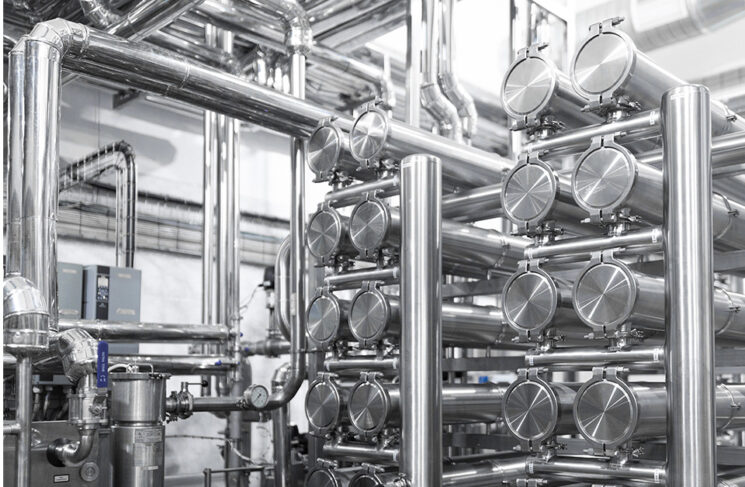
Most plants are losing recoverable protein yield they will never see on a report.
Membranes degrade slowly. The loss shows up in the permeate stream, which is not production’s focus. By the time the calendar calls for a change-out, most plants have been losing recoverable protein for weeks. Membrane replacement is one of the few six-figure operating decisions still made on calendar habit. The cost of getting it wrong shows up in a stream nobody is watching.
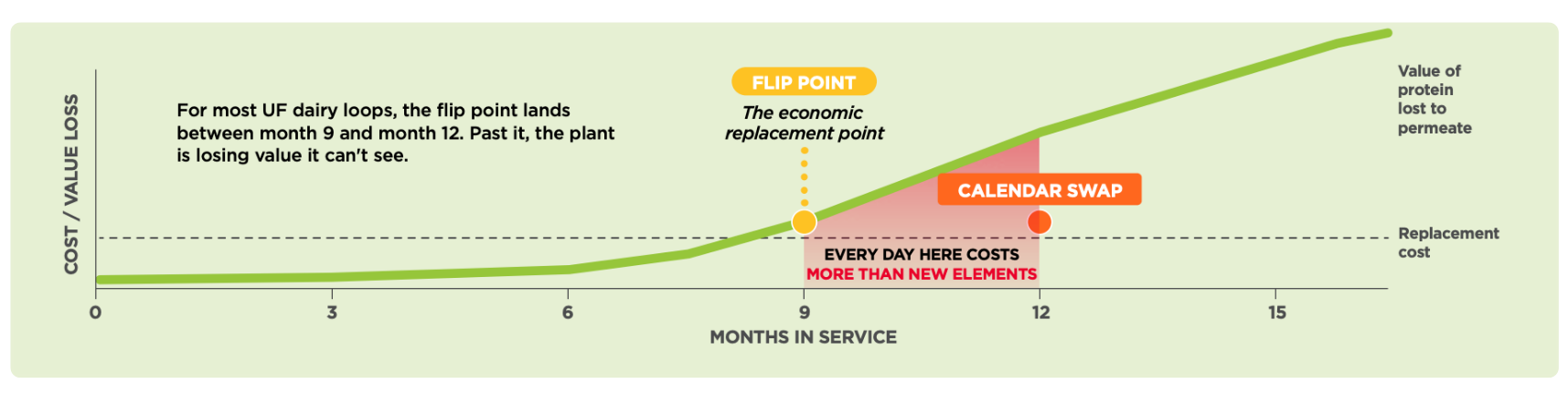
Every membrane has a flip point.
It’s the moment when the value of protein lost in the permeate exceeds the cost of a new element. For UF dairy systems, it typically lands at 9 to 15 months. Some loops cross over sooner; some run efficiently longer. The calendar cannot tell you which is which. SolectaINSIGHTS does.
What you get
A monthly read on every membrane line, delivered by an engineer who knows what to do with it.
Every month, your application engineer works through your operational data, permeate protein percent, flow rates, and pressures, building a trended view of how each system is performing. You receive a slide deck and a 60-minute review call. By the end of the call, you know:
- Which loops are still earning their keep, and which have crossed the economic replacement point.
- The dollar value of permeate protein you are losing per loop, per month.
- A specific change-out recommendation for each line, defensible in your next operations review.
In effect, SolectaINSIGHTS becomes your applications engineering department for membrane performance. Typical engagements recover two to three times annual membrane spend.
Access the Full Case Study
A US Italian cheese processor was watching yield drift across three parallel MF trains running the same whey feed. Solecta ran a side-by-side evaluation on one train for a full quarter, trending permeate protein, flow rates, and pressures daily against the incumbent membranes. The evaluation train delivered a 5.76% relative gain in MF protein yield and 97,440 lbs of additional protein recovered per year on that train alone. Payback landed at roughly 10 days.
The data earned a plant-wide rollout to all three trains. The facility now recovers about 292,000 lbs of protein annually and still runs the configuration today.
Built for dairy processors running UF or MF membrane systems.
You’re a fit if you operate multiple UF or MF loops in cheese, whey, milk powder, or fluid milk processing, you’re already capturing the basics (permeate protein percent, flow rates, pressures), and your current change-out cadence is driven more by calendar than by yield data.
Join the SolectaINSIGHTS waiting list
We’re taking on a small number of new engagements per quarter so every client gets direct applications engineer attention. Tell us about your operation and we’ll be in touch within three business days.
Common questions
Not in the data-science sense. SolectaINSIGHTS is an analytics service delivered by application engineers. The interpretation, the recommendation, and the call are human. The distinction matters when you’re making a six-figure replacement decision.
Permeate protein percent, flow rates, and pressures for each membrane loop. Optionally, your protein pricing, which sharpens the economic modeling. Most plants already capture all of this.
Twelve months is the ideal cadence to see a full replacement cycle play out on data. Three to six months is the minimum to deliver meaningful trended analysis.
Pricing is engagement-specific and scoped against your plant footprint, complexity, and reporting cadence. We share a quote after a short discovery call so the number reflects your actual operation.